
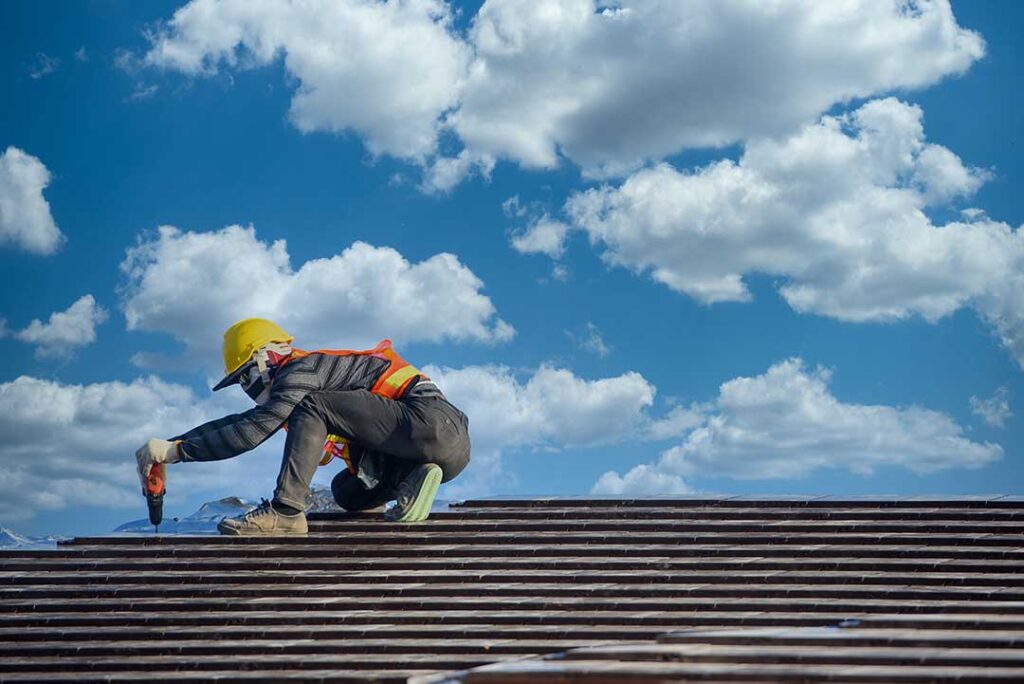
Roofing scams often appear after severe weather, when homeowners are worried about leaks, missing shingles, or visible damage. The safest response is to slow down, verify claims, and avoid making payment or signing paperwork before understanding exactly what is being proposed.
In Fairport, NY, roofing concerns can arise after heavy snow, freeze-thaw cycles, strong winds, falling branches, and summer thunderstorms. Those conditions may create legitimate repair needs, but they also create opportunities for dishonest operators to pressure homeowners into unnecessary work.
What are the most common roofing scams?
The most common scams involve unsolicited inspections, exaggerated damage claims, unclear contracts, unusually large deposits, and promises that insurance will pay for everything. Some operators use legitimate-looking paperwork or professional language to create urgency without providing dependable information.
Warning signs include:
- A person arriving without being requested, especially immediately after a storm
- Claims that damage is visible from the ground when no close inspection has occurred
- Pressure to sign the same day
- A request to sign over insurance benefits or allow someone else to control the claim
- A written proposal that lacks materials, quantities, payment terms, or warranty details
- A demand for full payment before work begins
- A price that is dramatically lower than other written proposals
- Refusal to provide references, proof of insurance, or business identification
A single warning sign does not prove fraud, but several together should end the conversation.
Why are storm-related roofing offers risky?
Storm damage creates urgency, and scammers use that urgency to discourage careful decisions. A person may claim that a roof must be replaced immediately even though the problem is limited to a few damaged shingles, flashing, gutters, or a tree limb.
A roof should not be judged solely by a salesperson’s verbal opinion. Homeowners can ask for dated photographs of each claimed problem and a written explanation of why repair or replacement is being recommended. If the alleged damage cannot be clearly shown, the recommendation deserves additional scrutiny.
Storm damage may also be confused with normal aging, old repairs, algae staining, or installation defects. An insurance claim should be based on documented facts rather than a promise that a claim will “definitely” be approved.
How can a homeowner verify a roofing company?
Verification should happen before signing a contract or allowing work to begin. Ask for the company’s legal business name, physical mailing address, telephone number, proof of liability insurance, workers’ compensation coverage when applicable, and references for recent local projects.
The name on the contract should match the name on the insurance documentation. Be cautious if a salesperson uses a different company name from the one printed on the paperwork or says documents will be provided later.
Useful verification steps include:
- Check whether the business has a consistent history and verifiable contact information
- Ask for references that are recent and similar in scope
- Confirm that insurance documents are current rather than expired
- Read independent complaints or reviews carefully, looking for repeated patterns
- Verify who will actually perform the work if subcontractors are involved
- Avoid relying only on a door hanger, temporary phone number, or social media page
A legitimate contractor should be able to explain the work without becoming hostile when basic questions are asked.
What should a roofing contract include?
A roofing contract should describe the work in enough detail that another person could understand what was agreed upon. Verbal promises are difficult to enforce if they do not appear in writing.
Look for:
- The complete business name and contact information
- The homeowner’s name and property address
- A detailed description of removal, repairs, installation, and cleanup
- The roofing materials, manufacturer, color, and product specifications when selected
- The estimated start and completion dates
- Total price, deposit amount, payment schedule, and conditions for additional charges
- Responsibility for permits, inspections, debris removal, and property protection
- Warranty terms, including who provides each warranty
- Procedures for change orders and cancellation rights
- The names of subcontractors, if known
Do not sign a blank contract or a document containing unexplained allowances. An allowance may mean the final price can change depending on the selected material or the amount of hidden damage discovered later.
Is a large deposit a warning sign?
A large upfront payment can be risky, particularly when the contractor has not purchased materials, supplied a detailed contract, or established a work schedule. Full payment before work begins is a serious warning sign because it removes the homeowner’s leverage if the project is delayed or abandoned.
Payment arrangements vary by project, but a reasonable structure should connect payments to progress. Homeowners should keep receipts, avoid paying in cash when possible, and never make payments to an individual when the contract is with a business unless the arrangement is clearly documented.
A low initial price can also be misleading. Some scams begin with an attractive quote and later add charges for decking, flashing, ventilation, disposal, or “unexpected” repairs that should have been addressed in the original inspection.
What insurance practices should homeowners avoid?
Homeowners should not sign documents they do not understand, especially documents involving insurance benefits, claim authority, or assignment of payment. A roofing contractor may help document visible damage, but the homeowner remains responsible for understanding the insurance policy and claim process.
Be cautious of anyone who:
- Guarantees that insurance will cover the entire project
- Offers to waive the deductible
- Suggests inflating the scope or price of work
- Asks the homeowner to misrepresent the date or cause of damage
- Requests control over insurance payments without a clear explanation
- Pressures the homeowner to file a claim before documenting the condition
Waiving a deductible or misrepresenting damage can create legal and insurance problems. The safest approach is to keep communications factual and preserve copies of photographs, reports, estimates, receipts, and claim correspondence.
What should a homeowner do after unsolicited roof damage claims?
Do not allow an unexpected visitor onto the roof simply because the person says an inspection is free. Ask for identification, take a photograph of the business card or vehicle information if appropriate, and say that no decision will be made during the visit.
A homeowner can:
1. Photograph visible conditions from the ground.
2. Check the attic for daylight, damp insulation, staining, or active dripping.
3. Place temporary protection under a leak, away from electrical hazards.
4. Obtain more than one detailed written assessment.
5. Compare the proposed repair with the actual documented damage.
6. Review the contract privately before signing.
7. Confirm cancellation and consumer protection rights under applicable New York law.
Do not climb onto a steep, wet, icy, or damaged roof. In the region’s winter and early spring conditions, snow and freeze-thaw cycles can make roof surfaces especially dangerous even when damage appears minor.
How can older homes avoid unnecessary replacement?
A roof that looks worn does not automatically require complete replacement. Age, curling shingles, granule loss, leaks, exposed fasteners, sagging areas, and deteriorated flashing all matter, but the correct solution depends on the roof system and the location of the problem.
Ask whether the recommendation is for a repair, partial replacement, or full replacement and why. Request photographs of damaged areas rather than accepting general statements such as “the whole roof is bad.” Also ask whether attic ventilation, ice-dam conditions, chimney flashing, or drainage problems may be contributing to the issue.
A careful explanation should distinguish visible damage from potential future maintenance. Those are not always the same thing.
What if a homeowner suspects a scam?
Stop signing documents and stop payments until the situation is reviewed. Keep all texts, emails, invoices, photographs, contracts, receipts, and recordings that were legally obtained. Write down dates, names, promises, and the condition of the roof before work began.
If there is an active leak, electrical danger, structural sagging, or unsafe temporary covering, address the immediate hazard without allowing emergency conditions to force an unrelated replacement decision. Consumer protection agencies, insurance representatives, and appropriate local or state authorities may provide guidance when a dispute involves fraud, unsafe work, or deceptive practices.
The most reliable protection is a pause between the initial sales pitch and the final decision. Clear documentation, independent verification, and a complete written agreement make it much harder for a dishonest operator to use weather, fear, or confusion against a homeowner.
